
Skip to content
PROJECT SHADOW 1.0.1 · CORRECTED R1 REFERENCE · PRELIVE · 2026-08-17

Project Shadow 1.0.1 contains no Myth package. Generic Myth v0.2.0 and Full-Canon Myth v0.3.5 are separate optional companions; both default off, neither is required by R1, and neither can authorize action or change an R1 result. PBHP remains in active testing; publication is not certification, independent validation, or deployment authorization.

Pause Before Harm shield logo
PAUSE BEFORE HARMPBHP · OPEN DECISION DISCIPLINE

Open, inspectable decision discipline

Pause before power becomes harm.

PBHP is a tiered harm-reduction protocol for people, AI systems, and organizations making consequential choices. Before action, it makes the decision-maker define what will happen, identify who bears the first cost if it is wrong, preserve what remains unknown, search for the smallest reversible path, assign a risk gate, and leave a receipt.

It is built to catch two failures at once: safety checks so noisy that people learn to ignore them, and safety systems so permissive that they disappear when stakes rise.

In active testing with Project ShadowOpen and inspectableIndependent validation still openNot a certification
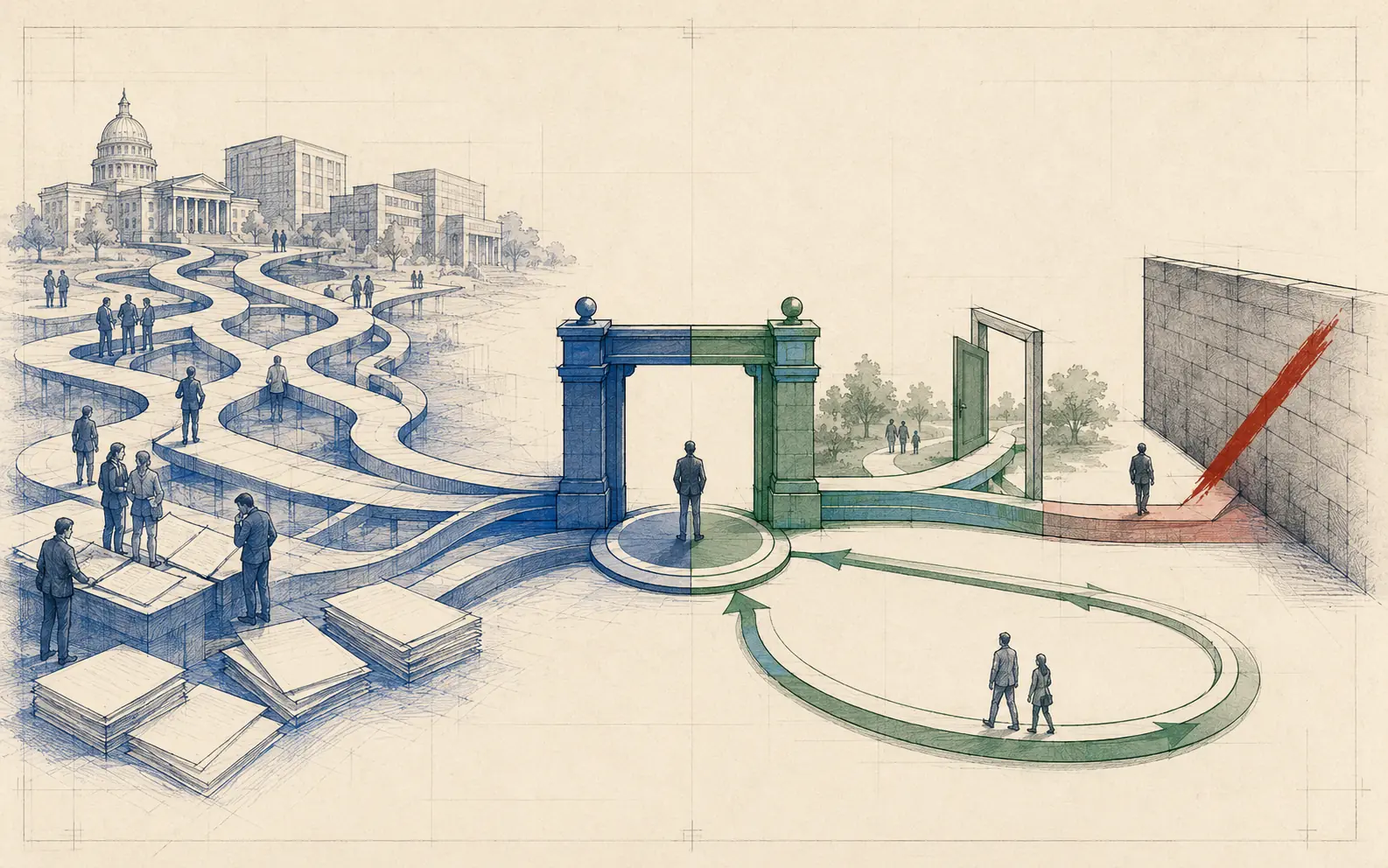
A field-manual drawing of complex decision paths reaching a blue-green pause gate and opening into a safer reversible door
THE OPERATING QUESTIONWho pays first if this is wrong?
09protocol moves
05risk gates
04rigor tiers
01receipt before action
THREE WORLDS / THE SAME PAUSE

Human judgment. Public systems. AI action.

PBHP is not only a personal checklist or an AI safety wrapper. It is a common discipline for any moment when a partial model of reality is about to become a consequence somebody else must absorb.

01 / HUMAN

A person is about to act

THE MOMENT
A manager, clinician, moderator, reporter, caregiver, or public worker has incomplete information and real discretion.
WITHOUT A PAUSE
Confidence, stress, role power, or a loaded frame converts one interpretation into another person’s consequence.
WHAT CHANGES
PBHP makes the action exact, names the first payer, surfaces the unknown, preserves recourse, and chooses the smallest reversible Door.
02 / INSTITUTION

A system is about to make harm routine

THE MOMENT
A policy, workflow, procurement rule, enforcement practice, or benefit process distributes cost and power across thousands of decisions.
WITHOUT A PAUSE
Procedure looks neutral while burden, appeal, delay, surveillance, or recovery remain radically unequal.
WHAT CHANGES
PBHP ties the consequence to an owner, binding floor, independent challenge path, stop rule, and evidence-backed effectiveness review.
03 / AI

Automation is about to multiply a model

THE MOMENT
A classifier, ranking system, assistant, or agent turns data and predictions into recommendations, access, monitoring, or tool use.
WITHOUT A PAUSE
Scale and fluency outrun authorization, evidence, distribution checks, human review, and the ability to recover from error.
WHAT CHANGES
PBHP bounds the action surface, raises rigor with consequence, gates release, logs every consequential transition, and keeps an independent stop available.
THE SHARED OUTPUTAction · evidence · first payer · unknowns · Door/Wall/Gap · gate · owner · stop rule · challenge · receiptSee the complete application map →
WHAT PBHP CHANGES

A pause with an output—not a vague request to be careful.

PBHP inserts a deliberate, auditable pause between a consequential decision and the act that makes it real. It does not demand paralysis. It demands enough friction to expose the action, evidence, power relationship, and recovery path while there is still time to change course.

The result is a named action state: proceed, proceed with mitigations, constrain and review, delay pending evidence, or refuse. PBHP does not promise the correct answer. It makes hidden assumptions, unequal burdens, skipped dissent, and post-hoc justification harder to conceal.

01

An exact action

Name who will do what, to whom, with which data, tools, authority, and expected consequence. A vague intention cannot pass as a decision.

02

A burden map

Identify who pays first if the action is wrong—especially people with the least power to refuse, appeal, exit, or recover.

03

A bounded path

Classify the action as a Door, a Wall, or a genuine Gap. Unknowns stay visible; they do not quietly become permission.

04

A write-ahead receipt

Record the evidence, unknowns, dissent, gate, owner, stop rule, and review trigger before commitment—not after the outcome is known.

WHY THIS EXISTS

We never act from reality whole. We act from a model of it.

That is ordinary cognition—not a defect PBHP can remove. The danger begins when a partial interpretation gains enough power to classify, expose, punish, deny, release, or lock in consequences for somebody with fewer ways to resist or recover.

PBHP does not try to eliminate uncertainty. It makes uncertainty, power, and the path back visible before action.
Read the reason behind the protocol →
THE DESIGN PROBLEM

Catch alarm fatigue and invisible risk.

One static safety ritual cannot serve every decision. PBHP scales friction with consequence, power, novelty, uncertainty, and reversibility.

FAILURE / 01

The alarm that never stops

If every action triggers the same heavy process, people route around it. PBHP supplies a concrete false-positive release path and uses the lightest rigor adequate to the stakes.

FAILURE / 02

The safeguard that disappears

If urgency, authority, or optimism can quietly lower the standard, protection vanishes exactly when power rises. Binding floors and drift alarms keep the gate from being negotiated downward.

THE CORE MECHANISMS

Six ways the pause resists pressure.

Each mechanism produces something inspectable. Together they turn concern into a decision process that can be challenged, reconstructed, and corrected.

PROPORTIONATE RIGOR

Friction scales with consequence.

A rapid personal choice should not carry the same procedural burden as an irreversible institutional release. As consequence and power rise, PBHP adds evidence, independent challenge, instrumentation, traceability, and accountable ownership. A higher tier never relaxes a binding harm floor.

01

HUMAN

Fast, bounded review for a person making an immediate decision.

02

MIN

Minimum viable rigor for lower-complexity choices that still carry a real harm signal.

03

CORE

Operational evidence, challenge, gate, ownership, and receipt discipline.

04

ULTRA

Constitutional depth for high-power, hard-to-reverse, or severe decisions.

THE BINDING OUTPUT

The most serious applicable condition governs. Preference, status, or confidence cannot ratchet a gate downward.

Read the risk system →
GREENProceed
YELLOWProceed with mitigations
ORANGEConstrain and review
REDRefuse or delay
BLACKRefuse absolutely
WORKED EXAMPLE / AI AGENT RELEASE

What the pause looks like in practice.

A team wants to release an agent with broad tool access because offline task success is high and a competitor may ship first.

Open the full casebook →
MAYBE

Offline success does not test hostile inputs, authorization drift, tool misuse, silent escalation, or human over-reliance.

FIRST PAYER

People affected by actions they cannot see, contest, or reverse.

GAP

The live authorization and interaction behavior has not been established.

DOOR

An internal, low-consequence cohort with allowlisted tools, transaction caps, complete receipts, independent stop authority, and a short review window.

THEREFORE

Release only the bounded pilot. Reopen immediately on an unapproved tool call, missing receipt, unresolved prompt injection, or unexpected reliance event.

WHERE PBHP RUNS

One discipline. Three operating forms.

01

Human decision review

A person or team runs the questions directly before committing to consequential action.

02

Assistive-AI conscience overlay

An AI helps surface affected parties, unknowns, counterevidence, safer Doors, and receipt fields without inventing authority.

03

Deterministic runtime gate

Software enforces named thresholds, decision states, logging, escalation, and stop conditions around an existing system.

In every form, PBHP adds constraint and legibility. It does not relax host safeguards, invent authority, or replace qualified human ownership. Project Shadow is the connected public testing and instrumentation environment for the deeper system path.

Implementation guidance →Open Project Shadow ↗
EVIDENCE STATUS

Built is not the same as validated.

PBHP keeps specified behavior, observed results, adverse findings, and open questions separate. These counts are bound to the named artifacts and test environments.

Inspect the full evidence ledger Read the research record →
115 / 115Reference runtime self-tests
247 / 247Codec self-tests
852Behavioral Falsifier machine-scored trials; human grading remains open
Not performedIndependent red team
Not performedHuman field study
These results support continued testing. They do not establish global safety, certification, independent validation, or real-world effectiveness.
THE CLAIM BOUNDARY
A protocol can create friction, evidence, and accountability. It cannot turn compliance into correctness or a clean receipt into a global green light.

PBHP is not a moral oracle, regulatory replacement, legal defense, or permission generator. Accountable actors remain accountable.

THE NEXT CONSEQUENTIAL DECISION

Slow it just enough to see the Door.

Run a decision ↗Read the field manual →Use the working templates →